
TECHNOLOGY
DTMSOFT employs a diverse suite of technologies in software development and industrial automation, ensuring our solutions are efficient, scalable, and reliable. This section provides an overview of the tools and platforms that power our projects and drive innovation.
Microsoft Technologies
DTMSOFT uses Microsoft’s technologies to build high-performance applications across platforms, helping clients achieve scalable solutions for their unique business requirements.
.NET / .NET Core
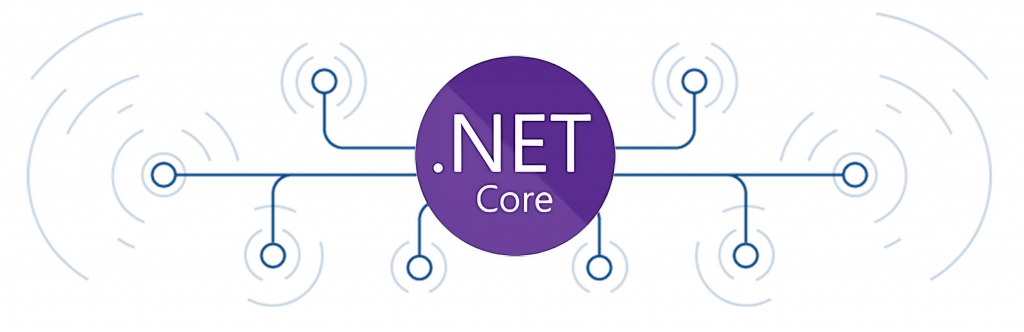
.NET Core is an open-source, cross-platform framework optimised for building high-performance applications, while .NET remains a robust platform for Windows-based applications.
- Cross-Platform: .NET Core runs on Windows, Linux, and macOS, making it versatile and adaptable to different environments.
- Modular Architecture: Uses NuGet packages to add only the components you need, keeping applications lightweight.
- Microservices-Friendly: Ideal for microservices architecture, with built-in support for containerisation via Docker.
- Community-Driven: Regularly updated by Microsoft and an active open-source community, ensuring access to the latest features and improvements.
Applications: Widely used for web applications, enterprise software, desktop applications, and APIs that require portability, security, and performance.
WPF (Windows Presentation Foundation)
WPF is a UI framework within the .NET ecosystem, designed for building visually rich, modern desktop applications with robust data binding, vector graphics, and animation support.
- XAML-Based UI Design: Uses XAML (Extensible Application Markup Language) to define UI layouts, allowing for easy separation of UI and business logic.
- Data Binding: Simplifies data handling by connecting UI elements directly to data sources, making it ideal for dynamic applications.
- Customisable and Flexible UI: Supports 2D and 3D graphics, animations, and media, enabling visually engaging interfaces that enhance user experience.
- MVVM Support: Designed to work seamlessly with the MVVM (Model-View-ViewModel) pattern, making it easy to develop modular and maintainable applications.
Applications: WPF is ideal for building desktop applications with complex UIs, such as enterprise software, dashboards, and applications that require real-time data visualisation and a high level of interactivity. It is particularly suited for industries that need powerful data presentation capabilities, like finance, healthcare, and manufacturing.

ASP.NET MVC / Web API
ASP.NET MVC provides a robust model-view-controller architecture for building dynamic web applications, while Web API is designed for creating RESTful services.
- MVC Pattern: Separates application logic, UI, and input control, providing structure and modularity for large applications.
- RESTful Web Services: Simplifies the creation of HTTP services that can be consumed by web clients, mobile apps, and IoT devices.
- Security Features: Includes built-in authentication and authorisation tools, supporting identity, role-based, and OAuth-based access control.
- Scalability: Easily scaled to handle high-traffic applications due to its optimised request handling.
Applications: ASP.NET MVC and Web API are essential for creating complex web applications, single-page applications, and backend services that support mobile and other front-end applications.
Entity Framework
Entity Framework (EF) is an object-relational mapper (ORM) that enables .NET developers to work with a database using .NET objects, abstracting the complexity of direct data manipulation.
- Database-First, Code-First, and Model-First Approaches: Flexible ways to define and manage the database schema.
- Change Tracking and Lazy Loading: Keeps track of changes to objects and retrieves related data only when it’s required, optimising performance.
- Migrations: Allows seamless database updates over time, making it easier to modify and evolve applications without downtime.
Applications: Entity Framework simplifies data access in enterprise-level applications and web solutions, allowing faster development and easier maintenance of data-intensive applications.
Industrial Automation Technologies
DTMSOFT brings deep expertise in industrial automation, utilising advanced PLCs, SCADA, and HMI systems to automate and control manufacturing processes, reduce human intervention, and increase productivity.
PLC (Programmable Logic Controllers)
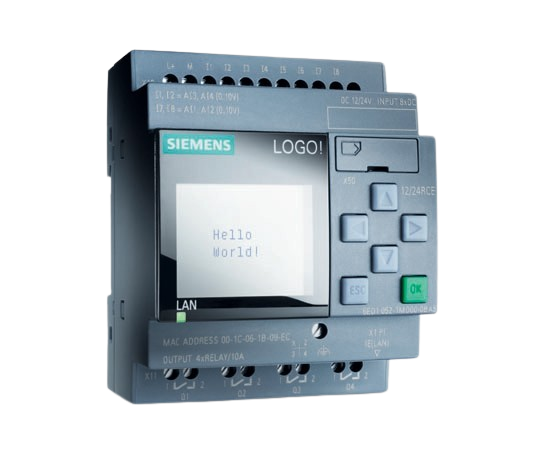
PLCs are industrial computers used to automate machinery, control processes, and collect real-time data for monitoring and optimisation.
- Beckhoff: Known for open automation solutions that integrate seamlessly with industrial IoT systems, providing flexibility and scalability.
- Allen Bradley (Rockwell Automation): Offers reliable and high performance PLCs widely used in automotive and manufacturing industries.
- Siemens: Siemens’ PLCs, especially the SIMATIC series, are trusted for their reliability and are used extensively in complex manufacturing setups.
- OMRON: High-speed PLCs suited for real-time control, ideal for precision operations in fast-paced environments like packaging and assembly lines.
Applications: DTMSOFT uses PLCs to automate repetitive tasks, control machinery, and streamline manufacturing processes, ensuring efficiency and consistency across industrial operations.
SCADA (Supervisory Control and Data Acquisition)
SCADA systems provide a centralised platform for real-time monitoring, data acquisition, and control of industrial processes.
- Beckhoff TwinCAT HMI: Integrates with Beckhoff PLCs, allowing users to design flexible HMI interfaces tailored to specific applications.
- RSView32 and FactoryTalk View: Rockwell Automation’s solutions provide comprehensive monitoring and control for Allen Bradley PLCs, popular in manufacturing and utilities.
- WinCC and TIA Portal: Siemens’ advanced SCADA tools provide robust data visualisation, control, and analytics, ideal for large-scale industrial applications.
- CX-One and Sysmac Studio: OMRON’s platforms streamline the programming and control of automation systems, integrating PLCs, HMI, and SCADA.
Applications: SCADA solutions are used in industries like manufacturing, utilities, oil & gas, and energy for real-time data acquisition, system monitoring, and remote control.
Development Tools
To deliver high-quality, reliable solutions, DTMSOFT utilises industry-leading development tools that support collaboration, code management, database development, and continuous integration.
Azure DevOps
A set of development tools from Microsoft designed to support the full software lifecycle, from planning and coding to testing and deployment.
- Pipeline Automation: Provides CI/CD pipelines to automate testing and deployment, reducing time-to-market.
- Agile Boards and Project Management: Helps teams plan, track, and collaborate on projects using agile methodologies.
- Version Control: Integrated Git repositories ensure safe and organised code management with branching and pull requests.
Applications: Used for managing agile projects, automating deployment, and ensuring smooth collaboration within development teams.
Visual Studio
A fully-featured development environment by Microsoft for building applications across Windows, web, and cloud platforms.
- Code Debugging and Profiling: Integrated debugging tools and performance profilers help identify and resolve issues efficiently.
- Integrated Git Support: Allows for seamless source control and versioning.
- Rich Extensions Marketplace: Support for a wide variety of extensions to customise and enhance the development experience.
Applications: Visual Studio is used for coding, debugging, and deploying .NET applications, providing a one-stop solution for development needs.

SQL Server
Microsoft’s relational database management system (RDBMS) is designed to store and retrieve data requested by other applications.
- High Availability and Disaster Recovery: SQL Server ensures data availability with features like Always On, backup, and recovery tools.
- Security and Compliance: Built-in security features, such as encryption, auditing, and compliance tools, protect sensitive data.
- Advanced Querying and Performance Optimisation: Tools for indexing, query optimisation, and in-memory processing enhance database performance.
Applications: SQL Server is used for building and managing databases in applications that require secure, fast, and reliable data storage.
Git & CI/CD Tools
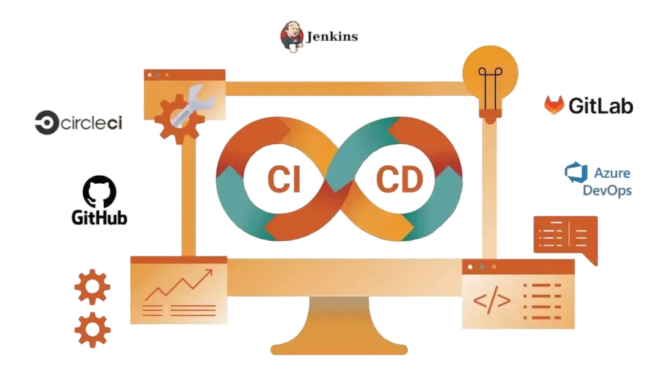
Git is a version control system that tracks code changes, and CI/CD tools automate the testing and deployment of applications.
- Source Control and Branch Management: Git allows teams to work in parallel, manage versions, and track changes, reducing merge conflicts.
- Continuous Integration/Continuous Deployment: CI/CD tools automate testing, building, and deploying code, improving software quality and reducing manual work.
- Integration with Other Tools: Integrates with popular platforms like GitHub, GitLab, and Bitbucket, as well as Azure DevOps for a streamlined workflow.
Applications: Git and CI/CD tools are essential in maintaining high code quality and ensuring rapid, error-free deployments, providing a stable foundation for agile development practices.
With this suite of technologies and tools, DTMSOFT provides clients with optimised, scalable solutions that meet modern demands in both software development and industrial automation.